Building style guides
Content style guides create consistency, reduce ambiguity, speed up decision making, and keep teams aligned, especially as products scale. They help every writer and designer make choices that reflect a brand’s voice, tone, and values. They also improve usability by ensuring language is predictable, inclusive, and easy to understand. In short, they make content feel intentional, cohesive, and human.

7-Eleven’s UX Consumer content style guide
I arrived at 7-Eleven as the first, and only, UX Writer for the UX Consumer team. My first step was to establish a style guide to provide guardrails for my work, enable me to rationalize content decisions, and empower the design team to aid in content creation
Context and challenge
No existing style guide
Multiple designers and product areas
Fast‑moving mobile team
Lack of experience collaborating with content
Need for consistency and shared decision‑making
My approach
Audit existing content
Identify patterns, inconsistencies, and friction points
Build principles rooted in brand voice, tone, and values
Create scalable rules for UI patterns, microcopy, and flows
Collaboration
Partner with designers to integrate content rules into workflows
Educate stakeholders on content rationale
Provide templates and examples to accelerate creation
Build trust
Impact
Faster design and content decisions
Reduced ambiguity
More cohesive product experience
Greater understanding and appreciation for content design
A foundation for future writers and designers
Examples
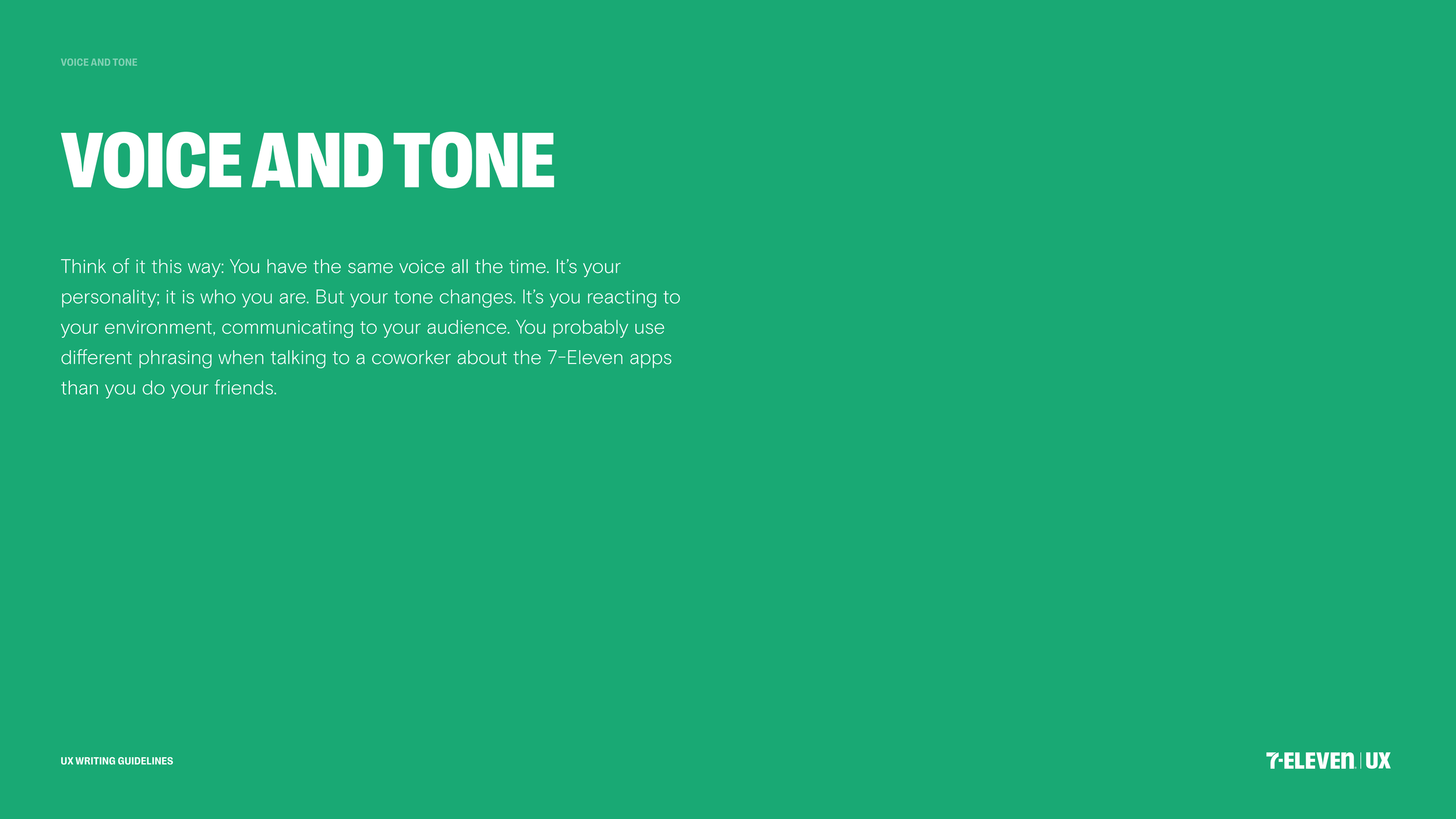
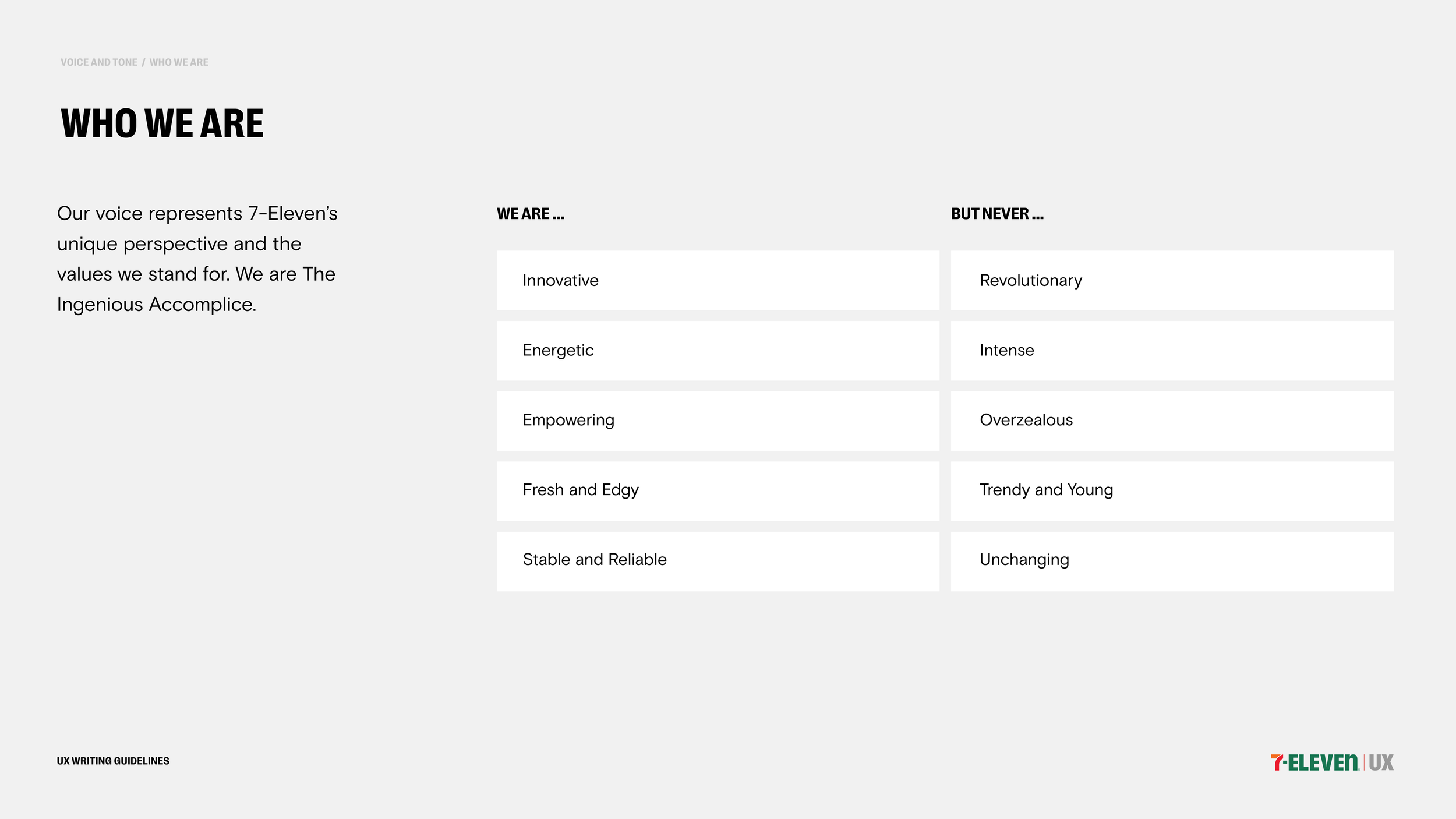
Voice and tone
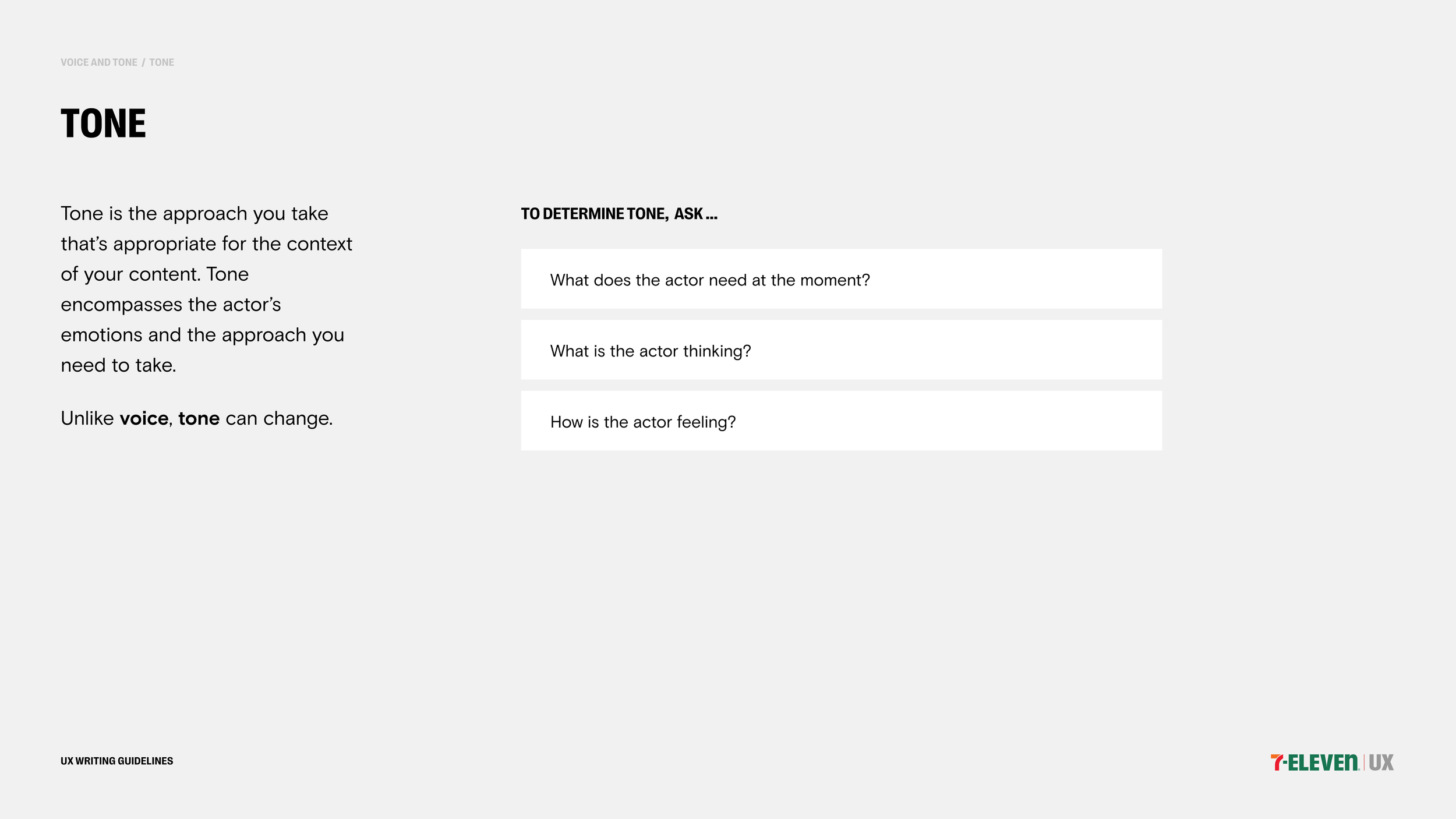
Voice and tone shape how a product feels, not just how it works. A clear voice expresses brand personality, while adaptable tone adds context and emotion. Together, they make interactions more human, predictable, and trustworthy.
.

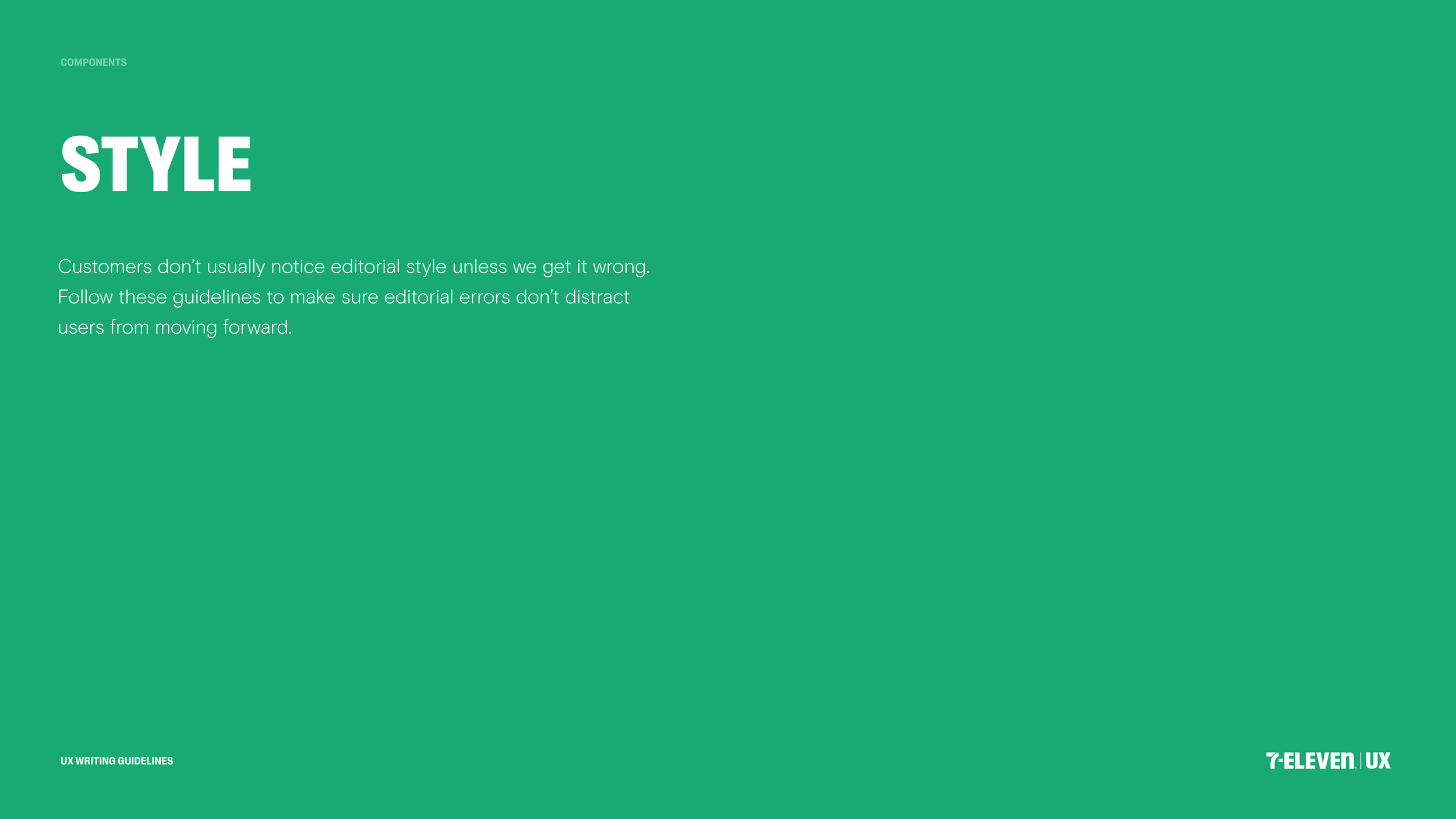
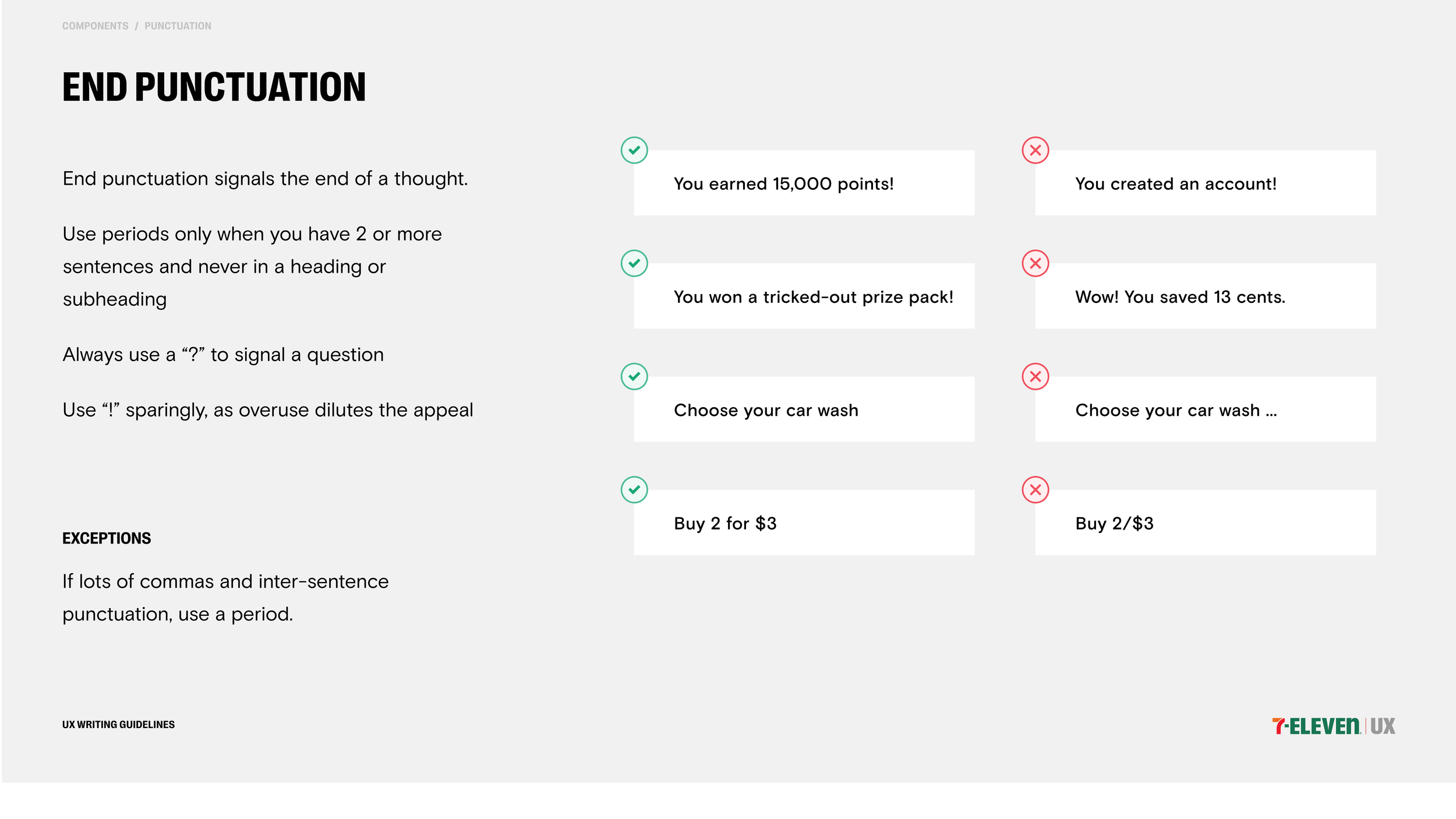
Style
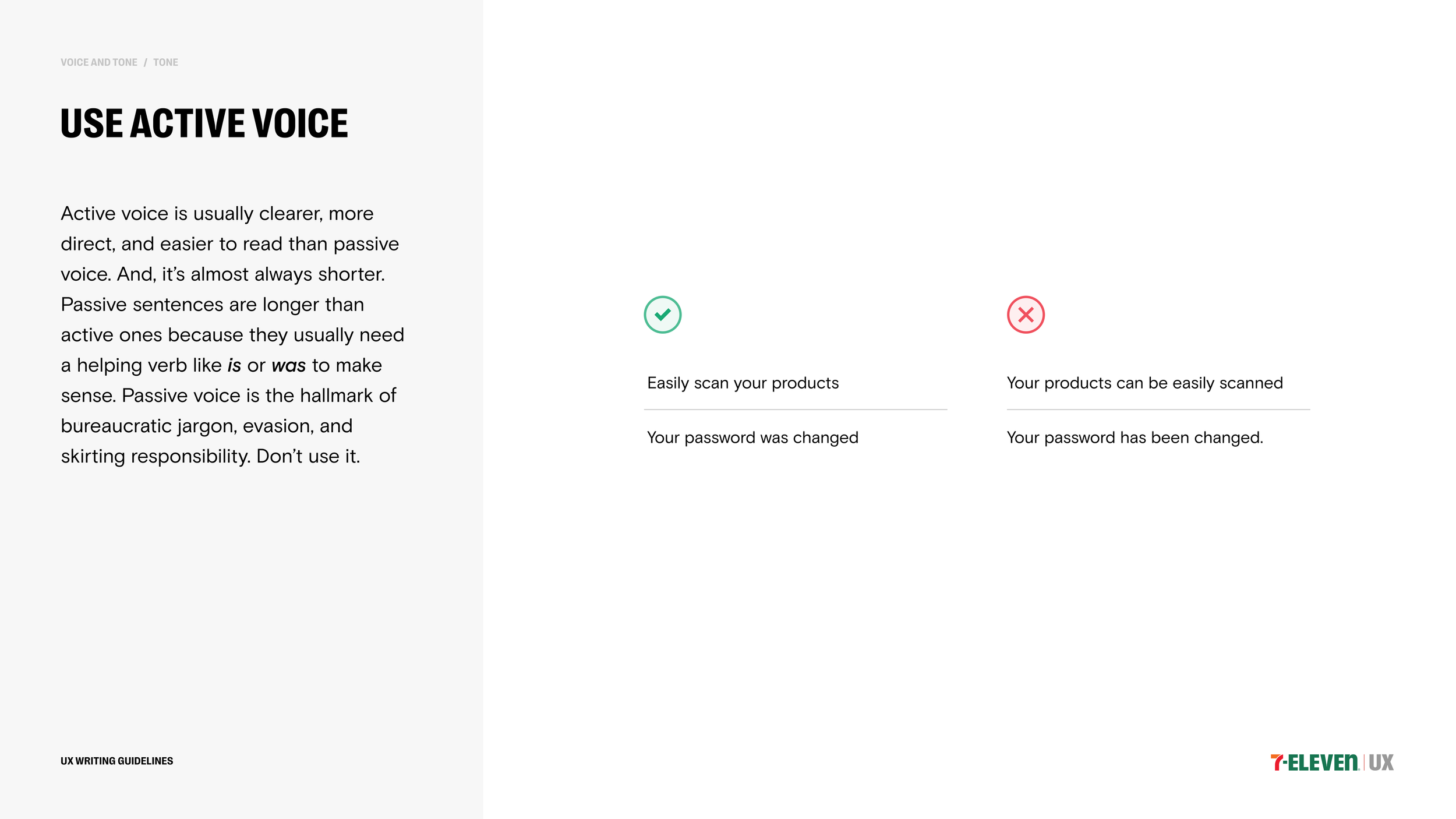
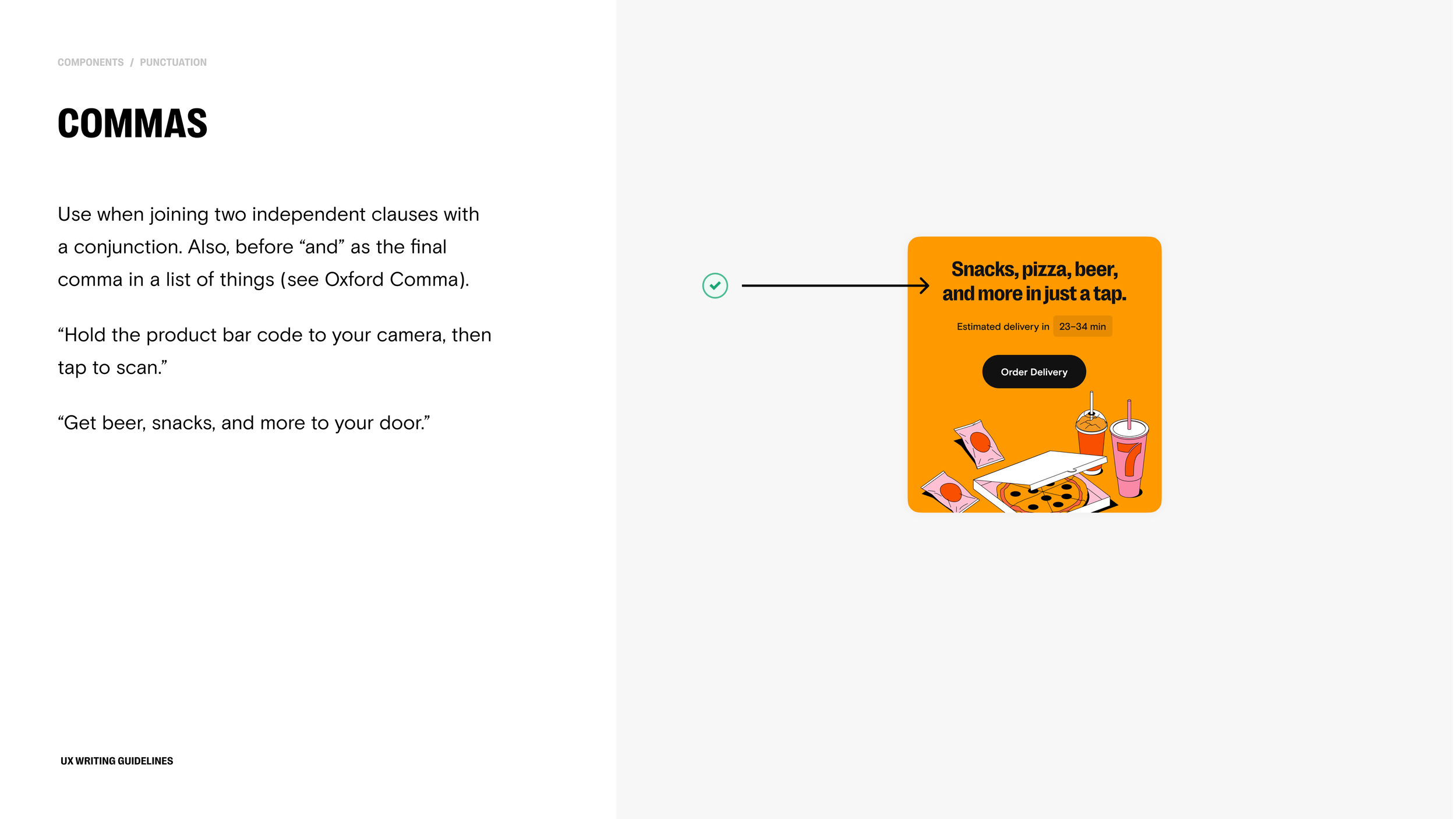
Style shapes how a product communicates, guiding everything from clarity to emotional impact. It influences layout, hierarchy, and interaction patterns by ensuring language is concise, consistent, and easy to scan. A strong style reduces cognitive load, helping users understand actions and make decisions quickly.
Content patterns
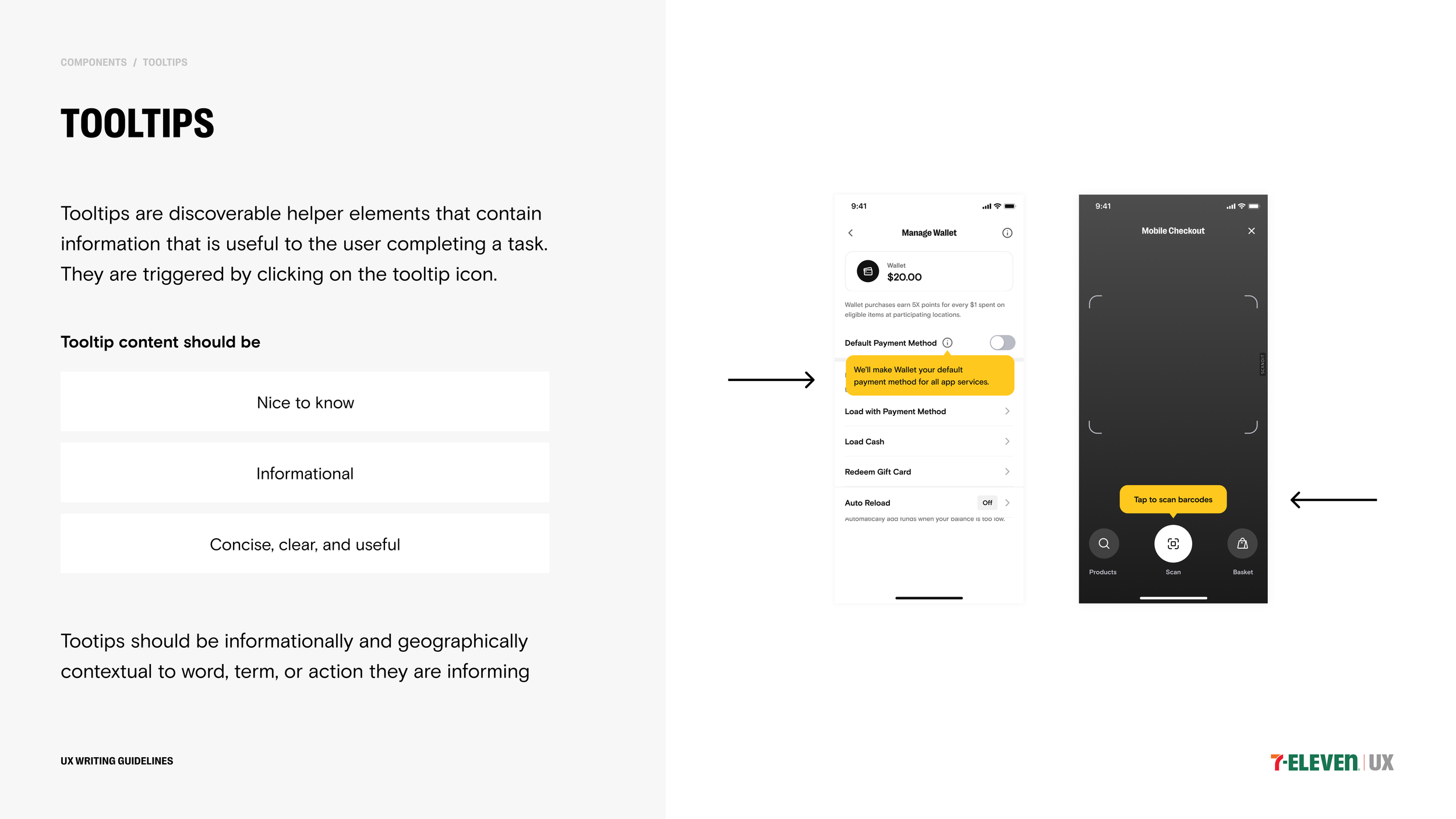
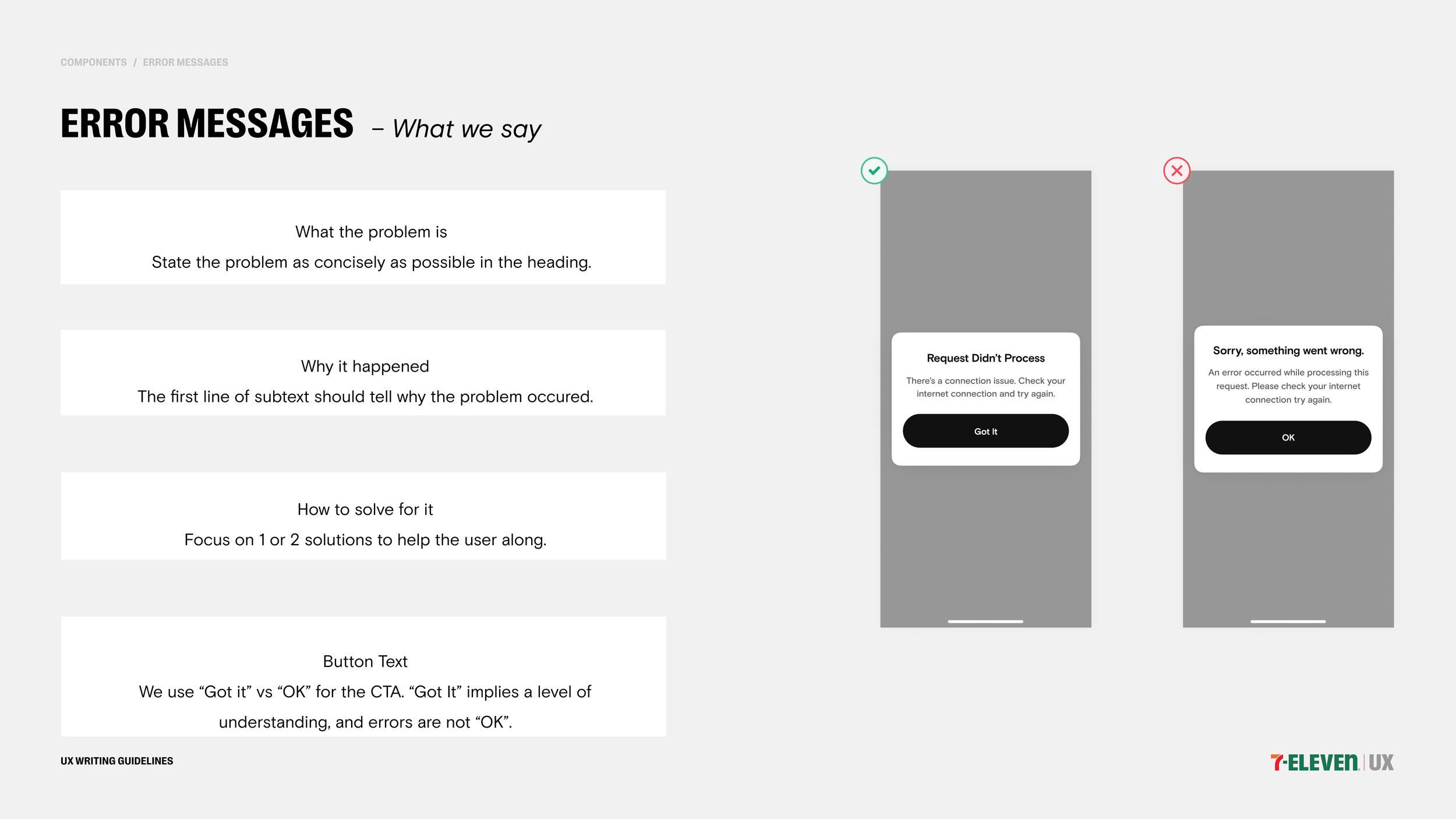
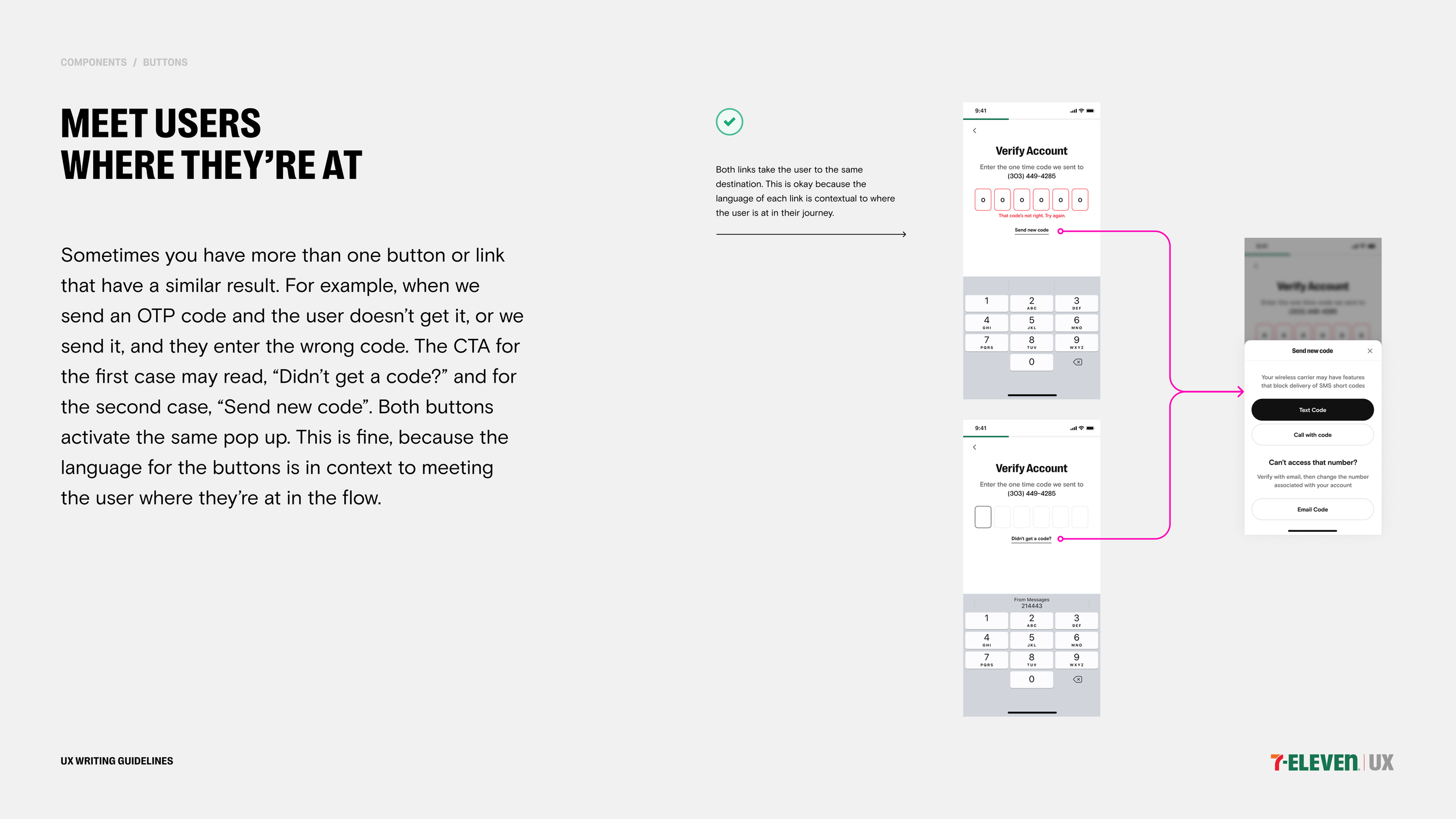
Content patterns make products feel intuitive. They give users familiar structures, like how errors are explained or how steps are presented. Patterns also help teams move faster by providing reusable solutions that are already tested for clarity and usability. They reduce inconsistency, preventing one‑off decisions. They also keep the product’s voice and behavior aligned across product areas. In short, content patterns create predictability, efficiency, and a smoother experience for everyone.
Accessibility
Usability shouldn’t be defined by user ability. Accessibility removes barriers, supports diverse needs, and creates a smooth experience for all users. Products that embrace accessibility experience reduced friction, increased trust, and expanded reach. Most importantly, it reflects a commitment to inclusive, human‑centered design, where no one is left out.
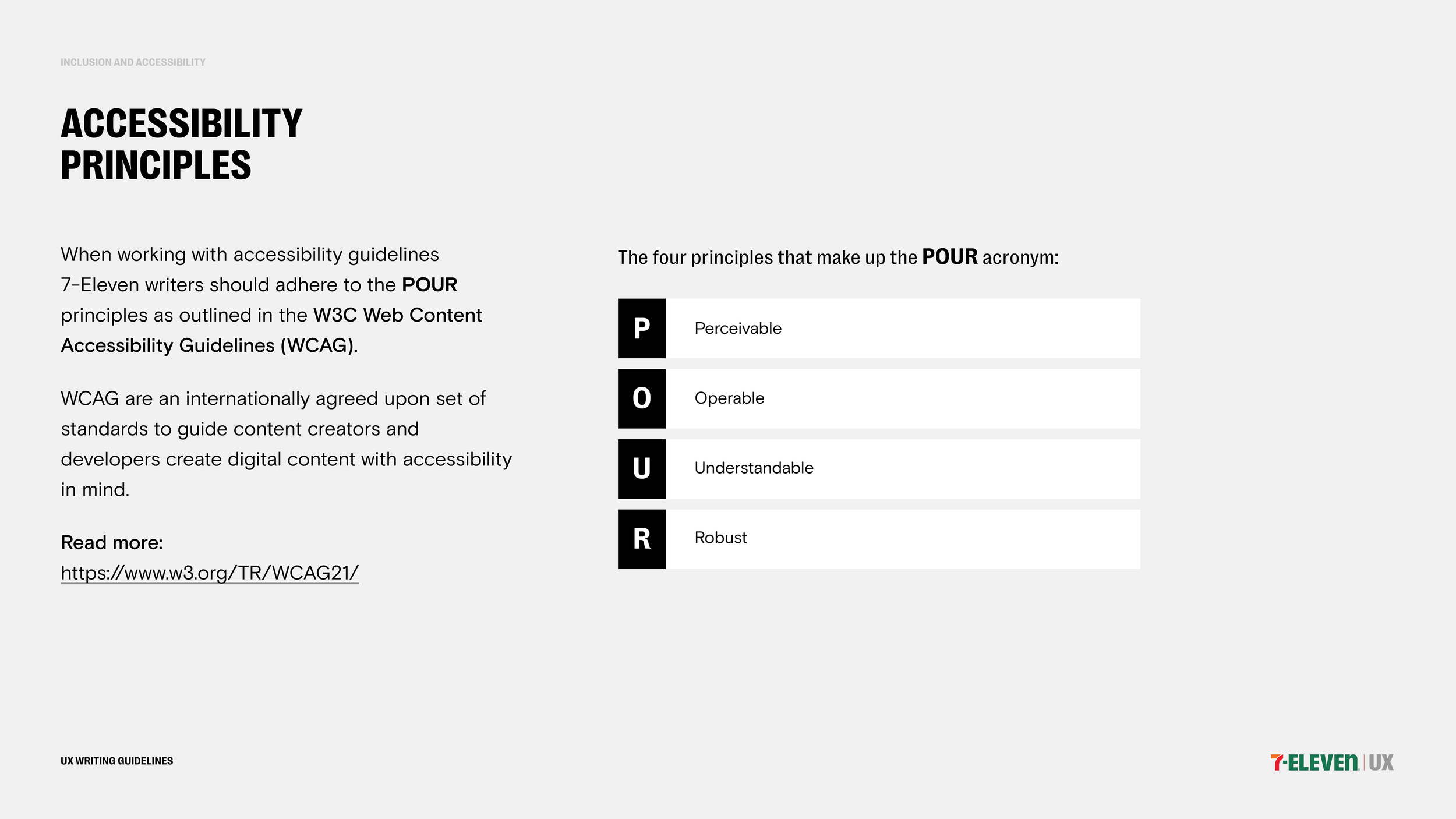
I introduced the team to the W3C POUR principles.
"Taye brings passion and a strong vision of how UX Writing and Content Strategy can help transform a digital product. He also understands how to advocate for process changes to get things done while navigating challenging work environments. Taye worked on my team at 7-Eleven as our Lead Content Writer. He transformed the way our entire digital products teams thought about content. In the past, content was an afterthought. Now, it is an integral part of the design process.”
- Daniel Lovas
Senior Group Manager, UX - Consumer Team